Challenge 01
IMU Address Detection — 0x69 vs 0x68
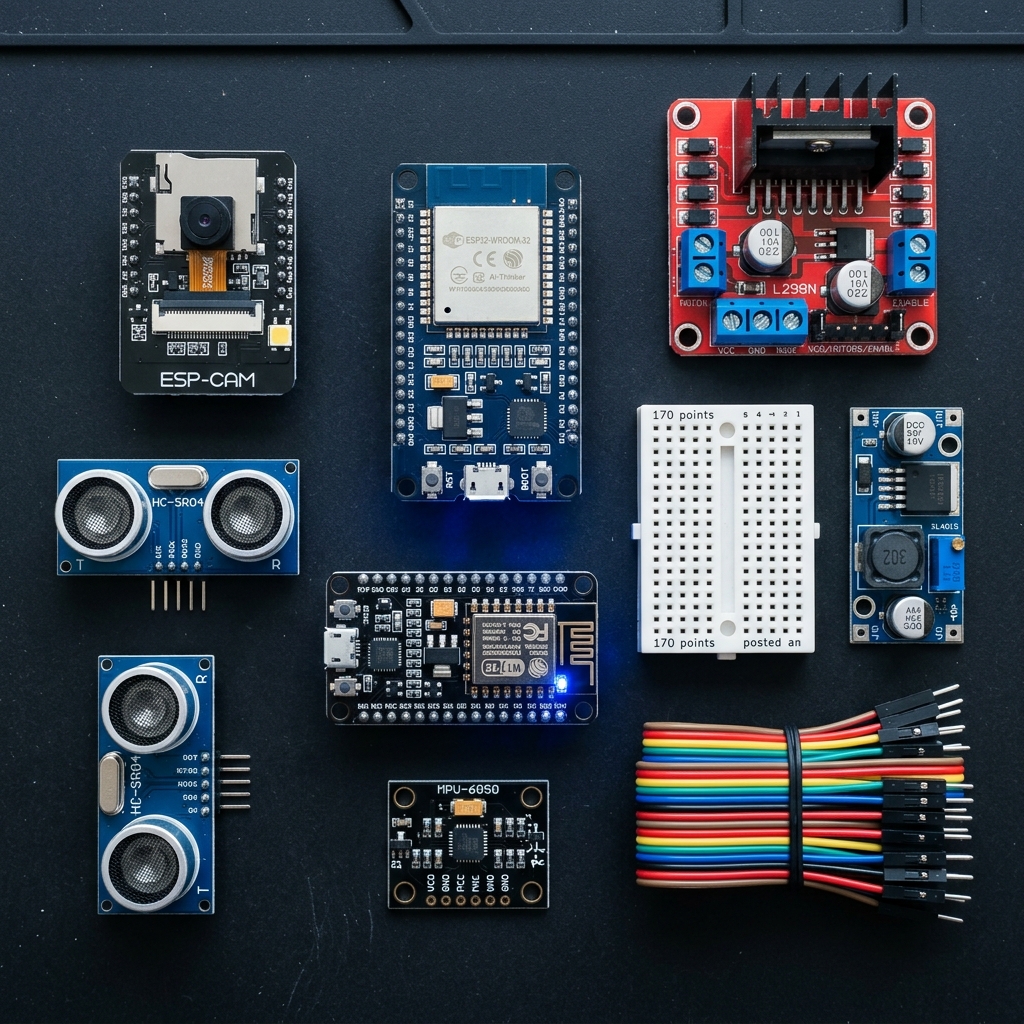
Spent hours debugging why the MPU-6050 wasn't responding. I was using I2C address 0x69 but the chip defaulted to 0x68. After fixing the address, we still got garbage values — turns out the sensor needed a proper initialization sequence and warm-up delay before readings stabilized.
Lesson: Always run an I2C scanner first. Never assume default addresses from tutorials — check the actual datasheet.
Challenge 02
WiFi Multi-Device Connectivity
Using my mobile hotspot, only 2 of 3 ESPs would connect reliably — one kept dropping. Switched to laptop hotspot and it worked. Root cause: phone hotspot had a device connection limit and aggressive power-saving that killed idle connections.
Lesson: In multi-MCU IoT systems, your network infrastructure matters as much as your firmware. Control your AP.
Challenge 03
Random Disconnections — Power Management
ESPs would randomly disconnect mid-operation. The issue was power — voltage drops under motor load caused MCU brownouts. Fixed by adding buck and boost converters to provide clean, stable voltage rails to each MCU independently of the motor power draw.
Lesson: In robotics, power design is as critical as software. Separate MCU power from motor power with proper regulation.
Challenge 04
ESP-NOW to WebSocket Migration
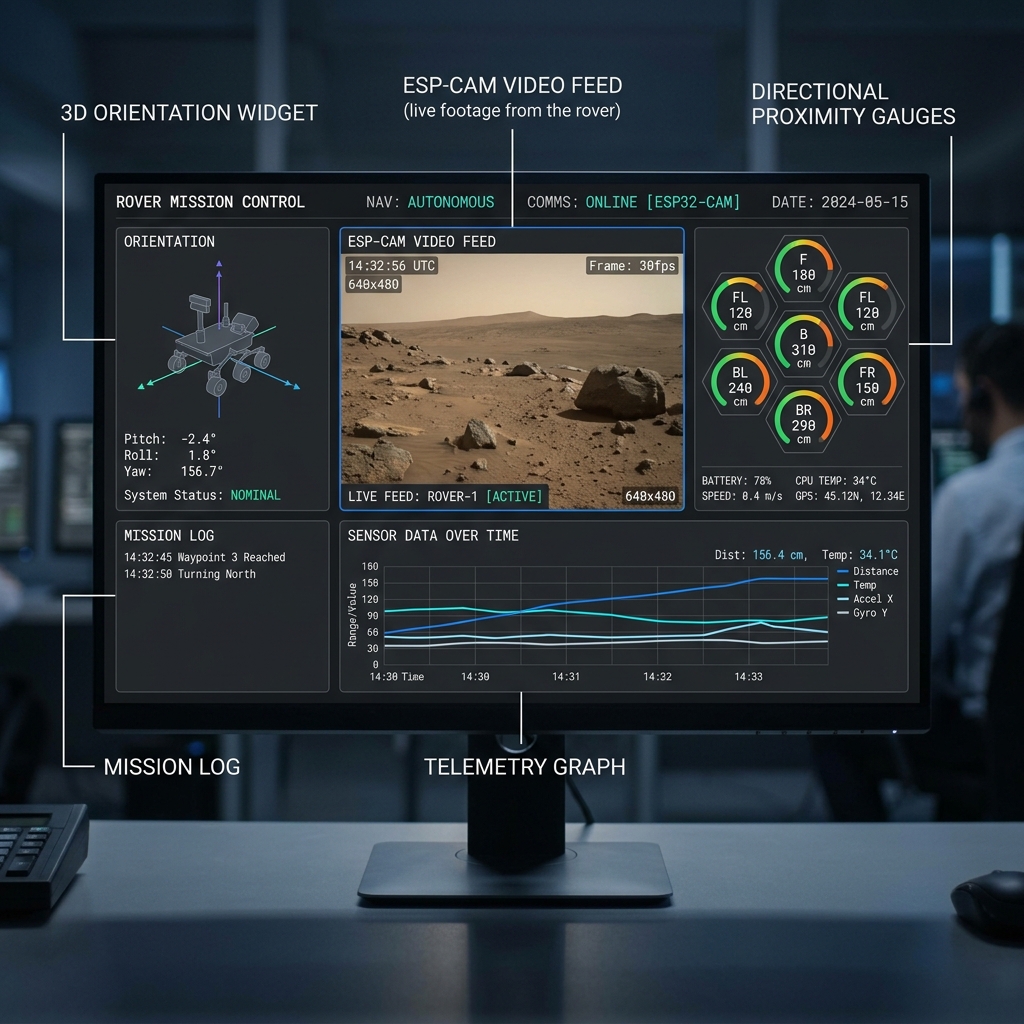
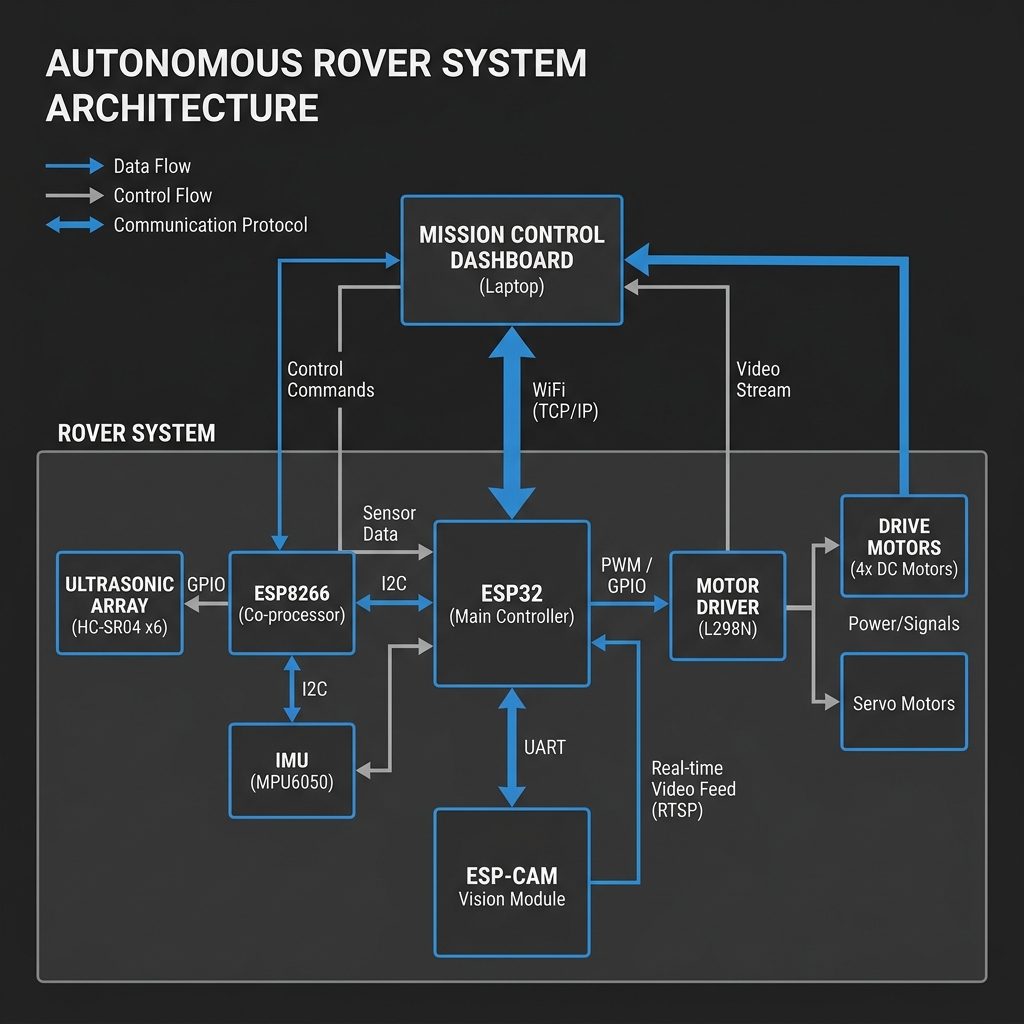
The original ESP-NOW setup worked perfectly for manual control but couldn't support bidirectional data flow needed for autonomous telemetry. Rewriting the entire communication layer to WebSocket mid-project meant restructuring both firmware and dashboard code.
Lesson: Choose your communication protocol based on the final use case, not the prototype. Architectural pivots are expensive.